
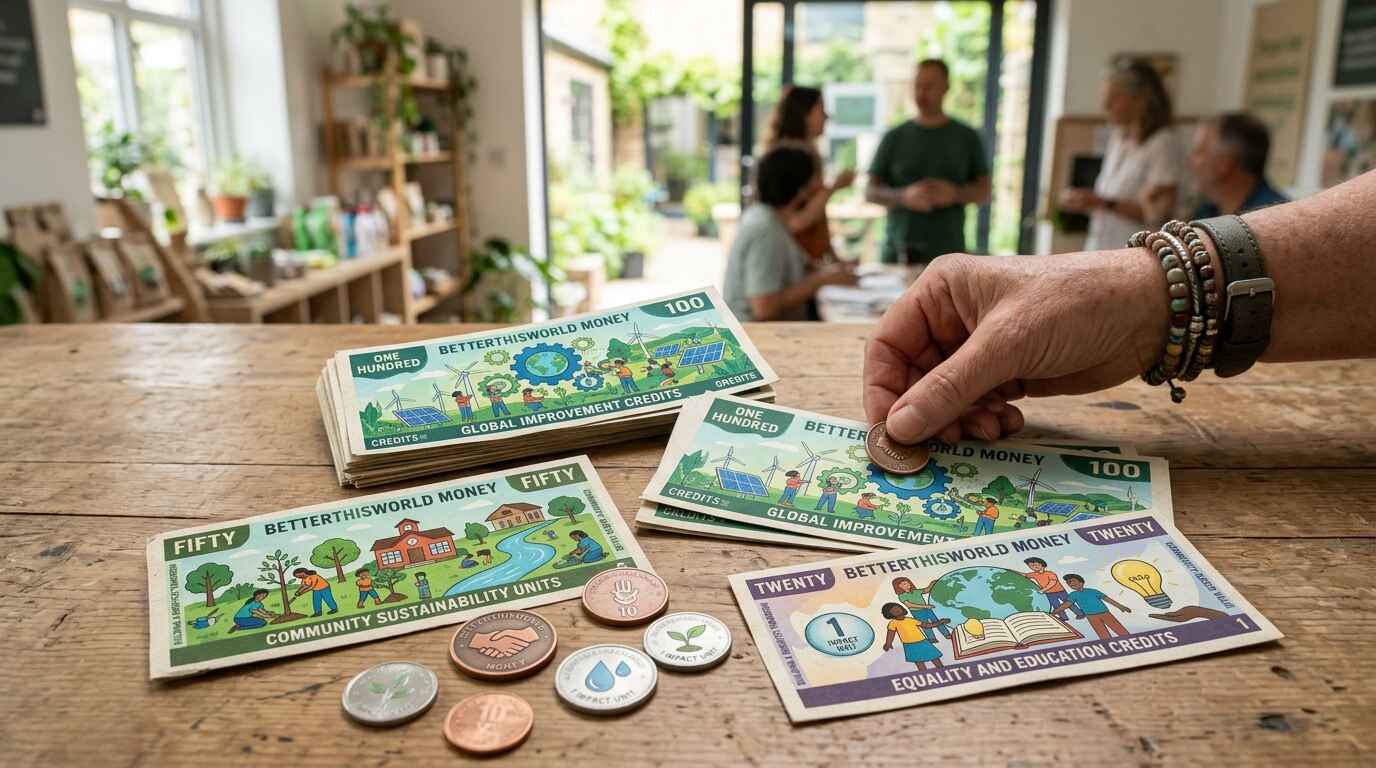
Most people search for betterthisworld money expecting another generic finance article filled with the same old advice cut your coffee, save 20%, invest early. But honestly? That kind of advice has never worked for the majority of people living real, complicated lives with real financial pressure.
This article is different. It’s written for people who are tired of surface-level tips and want actual clarity about what BetterThisWorld Money means, why it matters, and how to use it as a genuine framework for building financial stability without losing your mind in the process.
What Is BetterThisWorld Money and Why Is Everyone Searching for It?
BetterThisWorld Money is not a company, not an app, and definitely not a get-rich-quick scheme. It’s a financial philosophy a way of thinking about money that goes far beyond numbers on a spreadsheet.
At its core, BetterThisWorld Money means making financial decisions that are intentional, ethical, and aligned with your long-term goals. It’s about treating money as a tool for building a better life not just for yourself, but for your family and community too.
People are searching for this term because traditional personal finance advice feels disconnected from reality. Someone working two jobs, managing student debt, and trying to save for the future doesn’t relate to advice written for someone already earning six figures. BetterThisWorld Money fills that gap with a more human-first approach to financial wellness.
The Broken Money System — Why Traditional Financial Advice Fails Regular People
Here’s something no one in the finance world likes to admit: most money advice is written by people who have already made it. They tell you to “just invest in index funds” without acknowledging that millions of people are choosing between groceries and electricity bills.
Traditional advice fails because it ignores:
- Student loan pressure that eats a huge chunk of monthly income
- Medical emergencies that wipe out savings overnight
- Unstable income from freelance or gig work
- Social and family pressure to spend in ways that don’t align with your goals
- Emotional relationships with money shaped by childhood and culture
BetterThisWorld Money takes a flexible, human-first approach. Instead of forcing everyone into the same financial box, it helps each person find their own path — starting from wherever they are right now.
Financial freedom is not a one-size-fits-all destination. It’s a personal journey, and the route looks different for everyone.
BetterThisWorld Money Mindset: How Your Thinking Shapes Your Bank Account
Before you change your bank balance, you have to change how you think. This is where most people skip too quickly — they jump straight to budgeting apps and savings goals without addressing the deeper beliefs driving their financial behavior.
Money mindset is the collection of beliefs you carry about what money is, whether you deserve it, and whether building wealth is even possible for someone like you.
Common beliefs that silently block financial growth:
- “Money is the root of all evil” — this makes people unconsciously push wealth away
- “People like me don’t get rich” — this limits ambition before it even starts
- “I’m just bad with money” — this becomes a self-fulfilling prophecy
The BetterThisWorld Money mindset flips these on their head. It teaches that money is neutral — it responds to how you treat it. When you replace guilt with awareness, fear with education, and doubt with consistent action, everything shifts.
Scarcity thinking says “there’s never enough.” Abundance thinking says “I can create more with what I have.” Both are mindsets — and you get to choose which one runs your financial life.
Start by tracking your thoughts about money for one week. Write them down. You’ll quickly see patterns that have been quietly shaping your decisions for years.
The 5 Money Pillars of BetterThisWorld: Earn, Save, Budget, Invest, and Protect
Most financial frameworks focus on one or two areas. BetterThisWorld Money works differently — it covers all five pillars that together create real, lasting financial stability.
1. Earn — Focus on growing your income ethically and consistently. This includes your main job, side hustles, and skill development. Sustainable income growth beats chasing quick money every single time.
2. Save — Saving isn’t just about putting money aside. It’s about building a financial cushion that gives you options. Start with an emergency fund of at least three months’ expenses before thinking about anything else.
3. Budget — A budget is a plan, not a punishment. Without one, money disappears without explanation. With one, every rupee or dollar has a job to do.
4. Invest — Growing your money over time is what separates people who are comfortable from people who are free. Even small, consistent investments compound into significant wealth over a decade.
5. Protect — This pillar is almost universally ignored. Insurance, estate planning, and protecting your financial assets from unexpected events is just as important as building them.
Miss any one of these pillars and your financial structure becomes unstable. BetterThisWorld Money is about building all five, even if it takes years.
Smart Budgeting with BetterThisWorld Money: Beyond the 50/30/20 Rule
You’ve probably heard of the 50/30/20 budget rule — 50% for needs, 30% for wants, 20% for savings. It’s a decent starting point, but it’s not the whole story.
The reality is that for someone earning a lower income in an expensive city, 50% won’t cover basic needs. And for someone with high debt, 20% savings may need to become 30% temporarily. Life doesn’t follow a clean formula.
A more flexible approach:
| Your Situation | Suggested Adjustment |
| High debt | Increase savings/debt payoff to 30-35% |
| Low income | Focus on needs first, any savings is a win |
| Stable income | Follow 50/30/20 closely |
| Variable income | Budget based on lowest monthly income |
The BetterThisWorld Money approach to budgeting is this: the best budget is the one you can actually stick to. Track your conscious spending, identify where money leaks happen, and plug those leaks one at a time.
Practical tools that help: a simple notebook, a free budgeting app, or even a basic spreadsheet. The tool doesn’t matter — the habit of reviewing your money weekly does.
How to Invest Using BetterThisWorld Money Principles — Even If You’re Starting From Zero
Here’s where most financial articles either overwhelm you with jargon or oversimplify everything into “just buy stocks.” Neither is helpful.
Investing through the BetterThisWorld Money lens means starting where you are, not where you wish you were.
Step 1 — Build your emergency fund first. No investment return is worth going into debt over an unexpected expense. Three to six months of basic expenses, sitting in a savings account, gives you the foundation to invest without panic.
Step 2 — Understand your options at a beginner level:
- Index funds — Low fees, diversified, and historically steady growth over time. Ideal for beginners who don’t want to pick individual stocks.
- Retirement accounts (401k/IRA or equivalent) — Tax advantages make these powerful even with small contributions.
- REITs — Real estate investment without owning property. Accessible and liquid.
Step 3 — Start small and stay consistent. Investing $20 a month is infinitely better than investing $0 while waiting until you can invest $200. Consistency beats amount, especially in the early years when the habit itself is the most valuable thing you’re building.
Step 4 — Never try to time the market. This is where most beginners lose money. Invest regularly regardless of whether the market is up or down. Time in the market beats timing the market, every single time.
BetterThisWorld Money in the Digital Age: Online Income, Crypto, and Side Hustles Explained
The digital world has completely changed how people earn and grow money — and this is one area where competing articles barely scratch the surface.
Legitimate digital income streams worth exploring:
- Freelancing on platforms like Upwork or Fiverr — skills like writing, design, coding, and video editing are in constant demand
- Content creation — YouTube, blogging, and social media can generate passive income once established, though it takes time
- Online tutoring and consulting — if you have expertise, people will pay for it
- E-commerce — dropshipping, print-on-demand, and digital products all have lower startup costs than traditional business
A word on crypto and high-risk investments:
Cryptocurrency is real, it’s here, and some people have made significant money from it. But within the BetterThisWorld Money framework, crypto belongs in the “high-risk, small allocation” category — never more than 5-10% of your investment portfolio, and only money you can afford to lose entirely.
The digital world also comes with very real dangers. Fake earning apps, pyramid schemes disguised as “investment platforms,” and fraudulent websites promising passive income are everywhere. The rule is simple: if someone is promising guaranteed returns with no risk, walk away.
Financial wellness in the digital age means using technology as a tool — not getting used by it.
Teaching BetterThisWorld Money to Your Kids and Family — Build Generational Wealth
This is perhaps the most powerful and most overlooked section of any money conversation. Individual financial success is meaningful, but generational wealth is transformational.
Generational wealth means building financial habits, assets, and knowledge that your children and grandchildren inherit — not just money, but the understanding of how to keep it and grow it.
For young children (ages 5-10):
- Use a clear jar instead of a piggy bank so they can see money growing
- Give small amounts for chores and teach them to split it: save, spend, give
- Talk about money openly — financial secrecy creates unhealthy relationships with it later
For teenagers:
- Open a savings account and let them manage it with guidance
- Teach the concept of compound interest with a real example — show them what $100 a month becomes in 30 years
- Introduce the idea of earning beyond allowance — small freelance work, selling things they make, or offering services to neighbors
For the whole family:
- Have honest conversations about household finances at an age-appropriate level
- Create shared financial goals — a family vacation fund, for example, teaches collective saving
- Model the behavior you want them to copy — kids absorb what they see, not what they’re told
Building this financial culture within your family is the legacy that no market crash can take away.
Top 7 Financial Mistakes People Make — And How BetterThisWorld Money Fixes Them
Knowing what not to do is just as valuable as knowing what to do. Here are the seven most common financial mistakes — and the BetterThisWorld Money fix for each:
1. No emergency fund Fix: Before any investing or extra spending, build three months of expenses in a separate savings account.
2. Ignoring a budget entirely Fix: Track spending for just 30 days — no restrictions, just awareness. The patterns you see will motivate you to act.
3. Carrying high-interest debt while trying to invest Fix: Paying off 20% interest credit card debt is a guaranteed 20% return. Prioritize debt payoff before investing.
4. Lifestyle inflation after a raise Fix: When income increases, direct at least 50% of the raise toward savings or debt before adjusting lifestyle.
5. Chasing quick money schemes Fix: If it sounds too good to be true, it is. Sustainable wealth is boring — consistent, slow, and reliable.
6. Zero financial education Fix: Read one book on personal finance per year. Listen to one finance podcast regularly. Knowledge compounds just like money.
7. Never talking about money Fix: Financial secrecy breeds financial stress. Talk to your partner, your family, and trusted friends about money goals. Accountability changes behavior.
Visit: Car Dealership With Hearing Loop
Final Thoughts: Is BetterThisWorld Money the Financial Reset You’ve Been Waiting For?
If you’ve read this far, something in this resonated with you. Maybe you’ve been going through the motions of “trying to be better with money” without a clear framework. Maybe you’ve felt like conventional financial advice was written for someone else’s life, not yours.
BetterThisWorld Money isn’t a magic solution. It’s a mindset shift followed by consistent, intentional action. It’s about aligning how you earn, spend, save, invest, and protect your money with the kind of life you actually want to live.
The people who build real financial stability aren’t the ones who made the most money. They’re the ones who made the best decisions with whatever they had — and they started before they felt ready.
You don’t need a perfect income. You don’t need to eliminate all your debt first. You don’t need to figure everything out before you begin.
Start with one pillar. Fix one habit. Have one honest conversation about money with someone you trust. The reset begins the moment you decide your financial future deserves the same intention you give to everything else in your life.
Better financial decisions today that’s what BetterThisWorld Money is really about.