
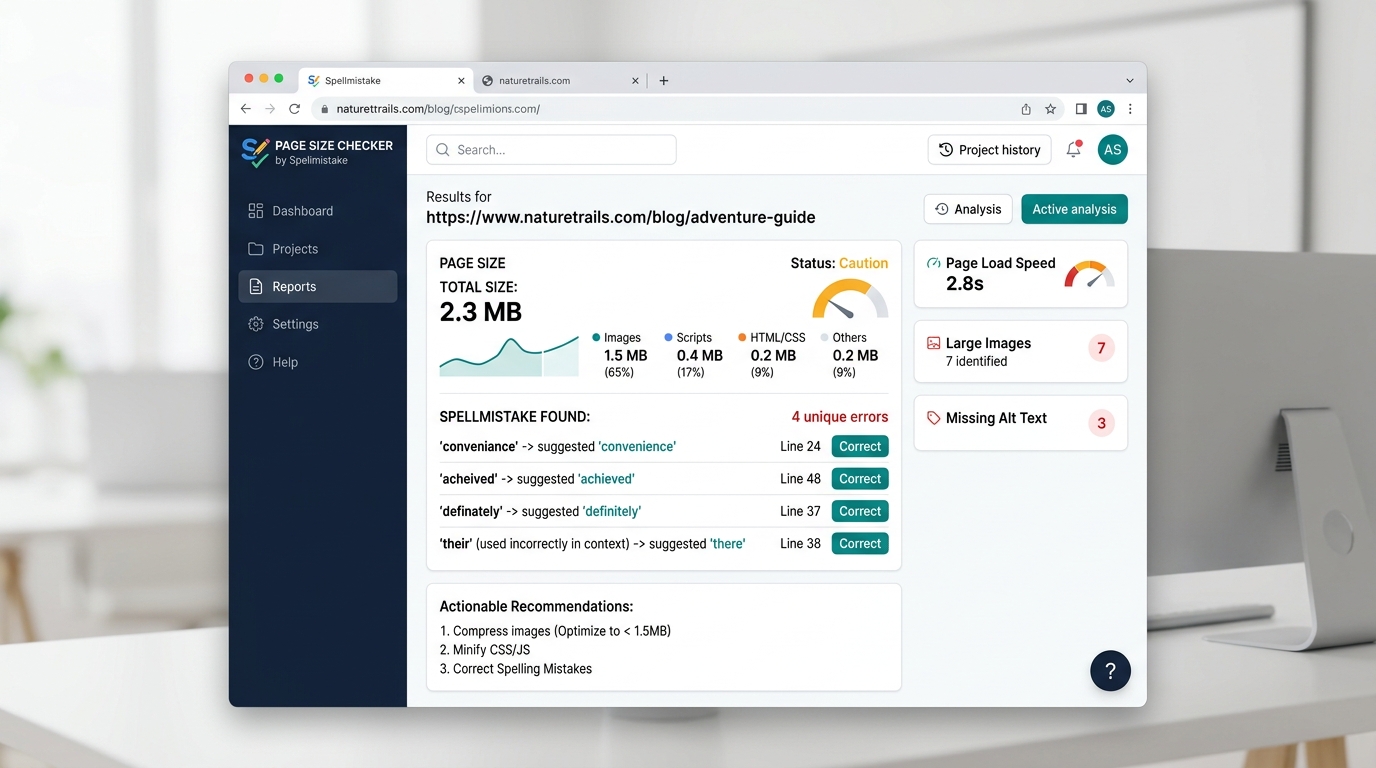
Website speed has become one of the most important ranking factors in modern SEO. Whether you run a blog, eCommerce store, portfolio, or company website, page loading performance directly affects user experience, search rankings, and conversions. This is where the page size checker by SpellMistake becomes extremely useful.
Many website owners focus only on design and content while ignoring page weight. Heavy web pages slow down loading speed, increase bounce rates, and damage overall SEO performance. A reliable website page size checker helps identify whether your pages are lightweight or overloaded with unnecessary resources.
In this guide, you’ll learn how the page size checker works, why page size matters for SEO, how to reduce webpage weight, and what optimization techniques actually improve website performance in 2026.
What Is Page Size Checker by SpellMistake and How Does It Work?
The page size checker by SpellMistake is an online tool designed to analyze the total size of a webpage. It checks how heavy a page is by calculating all loaded resources including:
- Images
- CSS files
- JavaScript files
- Fonts
- Media files
- External scripts
- HTML structure
When a URL is entered into the tool, it scans the webpage and provides detailed information about page weight and loading performance. This allows website owners to understand whether their pages are optimized for fast loading or need improvements.
A webpage size checker is especially important because modern websites often contain large images, animations, third-party scripts, and unnecessary code that increase loading time significantly.
Why Website Page Size Matters for SEO in 2026
Search engines prioritize websites that provide a better user experience. If your pages load slowly because of excessive page weight, rankings can suffer.
A large page size affects SEO in several ways:
Slower Loading Speed
Heavy pages take longer to load, especially on mobile devices or slow internet connections.
Higher Bounce Rate
Users rarely wait for slow pages. If a website takes too long, visitors leave immediately.
Poor Mobile Experience
Mobile-first indexing means Google mainly evaluates the mobile version of websites. Large pages hurt mobile performance badly.
Weak Core Web Vitals
Metrics like Largest Contentful Paint (LCP) and Interaction to Next Paint (INP) are influenced by page size.
Reduced Crawl Efficiency
Search engine bots crawl lightweight websites more efficiently compared to oversized pages.
This is why using a website performance checker regularly has become essential for technical SEO.
How Large Page Sizes Hurt User Experience and Rankings
Most website owners underestimate how page weight impacts visitors. A beautiful design means nothing if users cannot access the page quickly.
Here are common issues caused by heavy web pages:
- Delayed page rendering
- Slow image loading
- Laggy mobile browsing
- Increased server requests
- Higher bandwidth usage
- Poor engagement metrics
For example, many websites use uncompressed images uploaded directly from cameras or design tools. A single image can exceed several megabytes and drastically slow down loading speed.
Another major issue is excessive JavaScript. Many themes and plugins load scripts that are never actually used. Over time, these unnecessary resources increase webpage size and damage website loading performance.
Competitor articles often mention page speed generally but fail to explain how specific elements like render-blocking scripts and unused CSS impact SEO directly. Understanding these technical details gives you a competitive advantage.
Step-by-Step Guide to Using the Page Size Checker by SpellMistake
Using the tool is straightforward even for beginners.
Step 1: Open the Tool
Visit the page size checker tool online.
Step 2: Enter Website URL
Paste the URL of the webpage you want to analyze.
Step 3: Start the Analysis
The tool scans webpage resources and calculates the total page size.
Step 4: Review the Results
You’ll see information related to:
- Total webpage weight
- Resource usage
- Loading performance
- Heavy elements affecting speed
Step 5: Optimize Your Website
After identifying issues, start reducing unnecessary resources and optimizing content.
Many website owners make the mistake of checking only homepage performance. In reality, blog posts, category pages, and landing pages often become much heavier over time.
Ideal Website Page Size for Blogs, eCommerce & Business Sites
There is no universal perfect page size, but keeping pages lightweight improves user experience considerably.
Here’s a practical benchmark:
| Website Type | Recommended Size |
| Simple Blog | Under 1 MB |
| Business Website | 1–2 MB |
| eCommerce Store | 2–3 MB |
| Media-Rich Websites | As low as possible |
Modern websites naturally require more resources than older websites, but optimization still matters greatly.
A lightweight website loads faster, consumes less bandwidth, and performs better across all devices.
Common Reasons Your Web Pages Become Too Heavy
Many websites become oversized without owners realizing it. Here are the most common reasons:
Unoptimized Images
High-resolution images without compression increase page weight dramatically.
Excessive Plugins
Too many plugins load additional CSS and JavaScript files.
Poor Theme Coding
Some themes contain bloated code and unnecessary scripts.
Auto-Playing Videos
Embedded videos consume bandwidth and slow loading speed.
Unused CSS & JavaScript
Unused code still loads in browsers and affects page rendering performance.
Multiple Third-Party Scripts
Ads, tracking tools, social widgets, and analytics scripts can overload pages.
One major content gap competitors ignore is font optimization. Custom fonts may look attractive, but loading multiple font families significantly increases webpage size.
Best Techniques to Reduce Website Page Size Quickly
Reducing website page size does not always require advanced technical skills. Even small improvements can create a noticeable speed boost.
Compress Images Properly
Use modern image formats like WebP instead of PNG or JPEG whenever possible.
Enable Browser Caching
Caching stores website resources locally so users don’t reload everything repeatedly.
Minify CSS & JavaScript
Remove unnecessary spaces, comments, and unused code from files.
Use a CDN
A Content Delivery Network distributes website resources globally for faster loading.
Remove Unnecessary Plugins
Delete plugins that no longer provide value.
Lazy Load Media
Images and videos should load only when users scroll to them.
Reduce Redirects
Too many redirects increase server response time.
Optimize Fonts
Limit font families and weights to reduce requests.
Most competitor articles focus only on image compression while ignoring code optimization and third-party script management. These hidden factors often cause larger performance issues.
Page Size vs Core Web Vitals: What You Need to Know
Many people confuse page size with website speed, but they are closely connected rather than identical.
Core Web Vitals measure real user experience, including:
- Loading performance
- Visual stability
- Interactivity
Heavy webpages negatively affect these metrics because browsers need more time to process resources.
For example:
- Large images slow down Largest Contentful Paint
- Excessive scripts delay interaction responsiveness
- Unstable content shifts hurt visual experience
Using tools like Google PageSpeed Insights alongside a page weight checker gives a more complete view of website performance.
Combining technical SEO with page optimization creates stronger long-term rankings.
Advanced Optimization Strategies Most Websites Ignore
This is where many competitor articles lack depth. They discuss basics but ignore advanced website optimization techniques that can make a major difference.
Optimize Database Performance
Large databases slow dynamic websites significantly.
Use Server-Level Compression
Enable GZIP or Brotli compression for smaller transferred files.
Reduce DOM Size
Complex page structures increase rendering time.
Delay Non-Essential Scripts
Not every script needs to load immediately.
Optimize Above-the-Fold Content
Prioritize visible content first for faster perceived speed.
Self-Host Critical Assets
External requests can slow websites unexpectedly.
Monitor Performance Regularly
Website performance changes over time as content grows.
These advanced methods improve browser loading efficiency and help maintain stable Core Web Vitals scores.
Page Size Optimization Mistakes Most Website Owners Ignore
Even experienced website owners make optimization mistakes that quietly damage performance.
Chasing Perfect Scores Only
Real-world usability matters more than scoring tools alone.
Ignoring Mobile Users
Desktop performance may look fine while mobile remains slow.
Uploading Oversized Media
High-quality media should still be compressed properly.
Installing Too Many Tracking Scripts
Marketing tools often overload websites unnecessarily.
Forgetting Regular Audits
Performance should be monitored consistently, not once.
Using Cheap Hosting
Weak hosting environments slow websites regardless of optimization.
Many websites also forget about external embeds such as Instagram posts, YouTube videos, and social feeds. These elements can heavily impact page rendering speed.
Best Practices to Keep Your Website Fast and Lightweight
Keeping a website optimized requires continuous maintenance rather than one-time fixes.
Here are some long-term best practices:
- Regularly check website page size
- Audit plugins every few months
- Compress all uploaded media
- Use lightweight themes
- Limit animations and effects
- Keep code clean and organized
- Monitor mobile performance closely
- Test website speed after updates
- Optimize server response times
- Focus on user experience first
A fast-loading website improves SEO performance, engagement, conversions, and customer trust simultaneously.
Why Lightweight Websites Perform Better in Search Results
Search engines want to deliver the best possible experience to users. Fast and optimized websites naturally align with this goal.
Lightweight websites usually:
- Load faster
- Retain users longer
- Generate lower bounce rates
- Improve conversion rates
- Rank better over time
This is why website optimization is no longer optional. Even excellent content may struggle to rank if technical performance is weak. Using a reliable webpage performance tool helps identify hidden speed issues before they impact rankings seriously.
Read: Droven io Best Tech Tools for Developers
Final Thoughts
Why the Page Size Checker by SpellMistake Is Essential for Modern SEO Success
The page size checker by SpellMistake is more than just a basic website analyzer. It helps website owners understand how page weight affects SEO performance, user experience, and loading speed.
Many competing articles only explain the tool superficially, but real optimization goes beyond checking numbers. To build a high-performing website in 2026, you must optimize images, scripts, fonts, hosting, caching, and overall technical SEO together.
A lightweight website creates a smoother browsing experience, improves Core Web Vitals, strengthens search visibility, and increases visitor satisfaction.
Whether you run a personal blog or a large business website, regularly monitoring webpage size is one of the smartest long-term SEO practices you can follow.